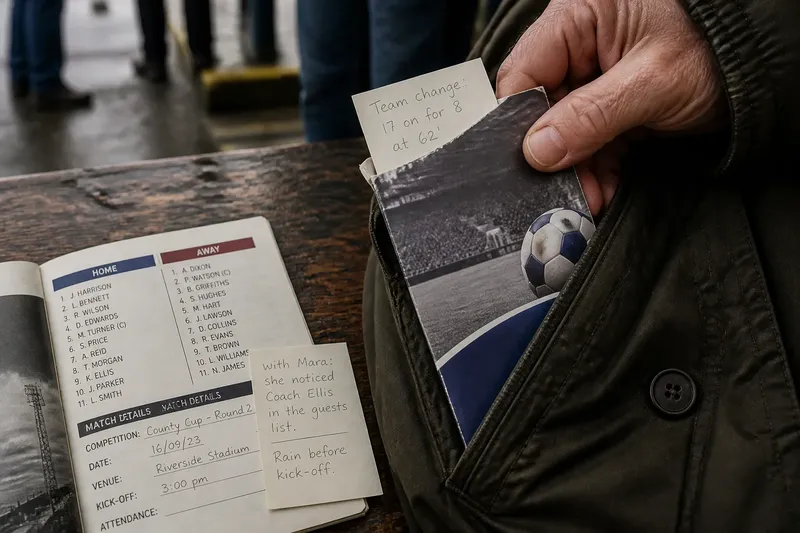
A First Visit to a Community Sports Gathering
A first visit to a community sports gathering feels easier when you know what to notice: how people share space, welcome newcomers and mark the occasion.
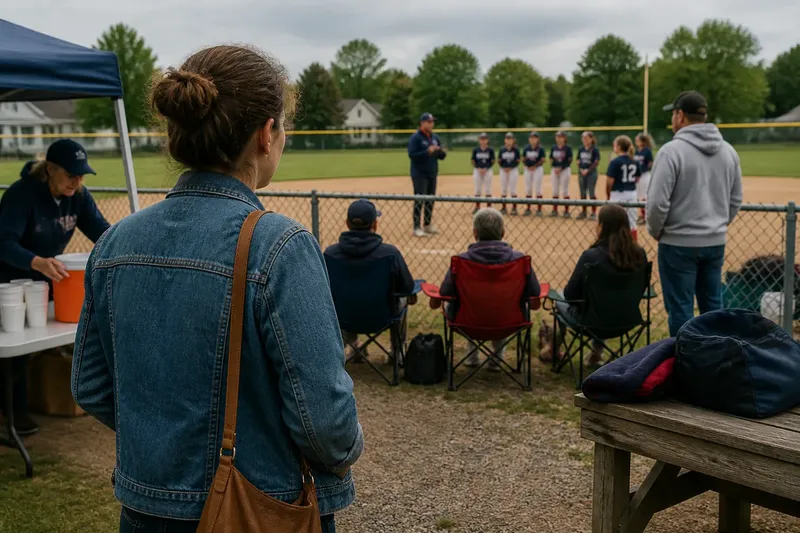
You arrive at the recreation field just as a volunteer carries a crate of oranges past the gate. A few people are setting out folding chairs; others already know where to stand. At a first visit to a community sports gathering, these small movements offer a gentler guide than trying to guess the whole place at once. Watch how people make room, ask before joining in, and let the gathering introduce itself.
What makes a community sports gathering feel different?
A community sports gathering is more than a game played in a public place. The event may bring together players, families, neighbors, volunteers, and people who have come simply to watch. Their ways of participating can overlap without being identical. One person keeps score, another minds the team cooler, and someone else chats with a friend from the other side.
That mix makes the atmosphere locally specific. A youth soccer match at a school field may feel different from a neighborhood basketball tournament in a park, even if both include familiar sights such as team colors and sideline encouragement. The venue, the people who organize it, the sport, and the event’s purpose all shape what feels customary.
So the first useful task is not to discover a secret rulebook. It is to notice how this particular group uses the space and responds to one another. You can take part at the level that suits you: watching quietly, offering a greeting, or asking how to help.
How can you read the space before joining in?
Pause near the entrance or at the edge of the activity, where you can see how the gathering is arranged without blocking anyone. Look for the playing area, the places people watch from, and any signs or tables that suggest where visitors should go. At a small event, the welcome may be as simple as a handwritten sign or a person with a clipboard.
Notice where people leave room to move. A path between the sideline and a bench may be clear for a reason; a cluster of chairs may belong to a family or team. If the layout is not obvious, ask a nearby organizer, volunteer, or participant, “Is there a good place for a first-time visitor to stand?” A direct, ordinary question is often easier than guessing.
Pay attention to how sound and movement work, too. People may cheer loudly during play but keep a quieter tone when a player is injured or a coach is speaking. Children may move between the field and the sidelines. These details are not a test of your knowledge; they help you choose a comfortable place and avoid interrupting someone’s role.
What does a welcome look like when customs vary?
Some gatherings have a host who greets visitors. Others rely on familiar faces to make introductions, while a busy event may offer little formal welcome at all. A reserved reception does not necessarily mean a visitor is unwelcome; people may be focused on getting players ready or keeping the event on schedule.
Start with a small, low-pressure signal. Make eye contact, smile, or say hello to someone who is not occupied. If there is a visible organizer, ask what the event is celebrating or how the day is arranged. You can also begin by recognizing what is happening: “That was a close play,” or “I’m new here—where do people usually watch?”
Then give the other person room to respond. A brief answer may be all they have time for, and that is fine. Welcome can appear through practical gestures: someone shifts a chair, points out the water station, or explains where spectators can stand. Accept the help without treating one person’s kindness as a rule that everyone must follow.
How do people share space without making a fuss?
Shared space is often managed through small adjustments rather than announcements. Spectators leave sightlines open, bags stay near their owners, and people move aside when a player or referee needs to pass. The details change with the venue, but a useful habit travels well: notice what others need to do before choosing where to settle.
At a crowded sideline, stand behind the line of chairs rather than squeezing into a gap beside the team bench. At an open park, keep an eye on paths used by walkers and players. If you bring a stroller, chair, or large bag, place it where it will not narrow a route. These modest choices let people use the same space without turning every decision into a conversation.
Joining an activity calls for the same care. A warm-up circle, volunteer table, or post-game huddle may look open, but it could be reserved for the team. Ask before stepping in. If an invitation comes, follow the host’s cue about where to go and what to do; if it does not, watching from the edge is a perfectly real form of attendance.
How do people mark the occasion?
The gathering may have a recognizable moment: a team introduction, a shared snack, a short speech, a group photo, or a final round of thanks. Some events have several; others move straight from play to packing equipment. The occasion can be marked through sound and gesture as much as through a formal program.
Watch for a shift in attention. People may turn toward a speaker, gather near a table, or pause before the first play begins. Following that change is usually enough to understand whether spectators are expected to join. If you are unsure, take a cue from a nearby person or simply observe. There is no need to imitate a chant, wear team colors, or perform enthusiasm you do not feel.
Say you arrive at a neighborhood softball game while volunteers are setting out paper cups. You notice that spectators gather behind a low fence and that a player is about to speak to the group. You choose a clear spot, wait through the brief announcement, then ask a volunteer whether the cups are for visitors too. The likely result is a clearer sense of the event’s rhythm—and a chance to participate without assuming that every custom belongs to you.
What questions help a first-time visitor?
Should you introduce yourself to a team?
Yes, if there is a natural opening, but keep it brief and follow the team’s lead. A quick hello to a coach or organizer is usually less disruptive than approaching players during warm-ups or play.
Is it all right to watch without joining in?
Usually, watching is a complete way to attend, especially from a public spectator area. If the boundary between public and team space is unclear, ask before settling there.
What if nobody explains the local customs?
Observe the flow of the event and ask one practical question when someone is available. You can also choose the least intrusive option—such as standing back from a group—until the arrangement becomes clearer.
Should you bring something for the gathering?
Not unless an invitation or event notice asks for it. If you would like to contribute, ask an organizer what would be useful rather than bringing food, equipment, or gifts that may not fit the occasion.
What is not worth the effort?
Trying to decode every gesture before you say hello can make an ordinary visit feel like an examination. You do not need to memorize a team’s history, learn every nickname, or copy the loudest spectator. A little attention and a willingness to ask politely will do more than an elaborate performance of belonging.
It is also unhelpful to assume that one welcoming person speaks for everyone, or that a quiet crowd is unfriendly. People may be busy, shy, or simply focused on the game. Let the event be itself rather than measuring it against another gathering you have attended.
How can you leave the door open for another visit?
Before you go, thank the person who helped you or offer a simple goodbye. If the event has a public noticeboard, team page, or printed schedule, you can check whether another gathering is open to visitors. Keep the details that mattered to you: where people watched, who welcomed questions, and when the group paused together.
A first visit to a community sports gathering is less about getting every custom right than learning how this group shares its particular patch of space. Arrive with curiosity, make room, and let people’s cues set the pace. If you leave knowing one person’s name or one small thing about the gathering, you have a natural starting point for coming back.