The Match Programme as a Keepsake of a Day
A match programme keepsake can preserve the names, scribbles and handling marks that bring one sports occasion back into focus, without elaborate collecting.
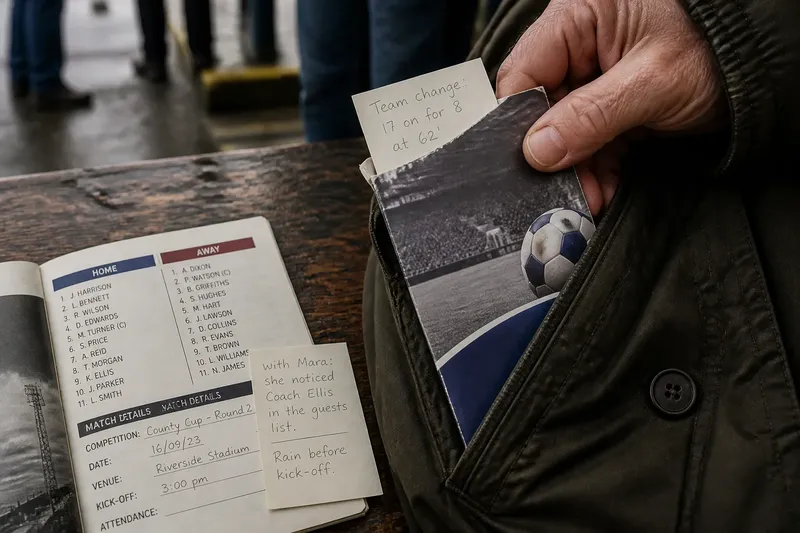
A folded match programme slips into a coat pocket as the crowd streams out, its cover softened at one corner and a pencilled team change tucked beside the line-up. A match programme keepsake is not just a record of who played; it can hold the small details that make one particular day return to mind. What makes it worth keeping depends on the day you had and what you want to remember.
What do you want the programme to remember?
Before choosing a way to keep a programme, name the memory you want it to carry. Was this a first visit, a long-awaited fixture, a day shared with someone, or simply an afternoon whose details you do not want to lose? The answer changes which marks and pages matter most.
Printed names can anchor a memory in the game itself: the teams, venue, squad list and competition. The date and opponent help distinguish one fixture from another, especially when several programmes have similar covers. A personal note can connect those facts to the occasion: the seat you found, the weather, the journey, or a moment that made the crowd react.
Keep the note brief and specific. “Rain started before the teams came out” may bring back more than “great day.” If the programme belongs to a shared outing, invite the other person to add a name or a short recollection. Their handwriting becomes part of the object’s record, not a substitute for the printed one.
Which situation fits your matchday?
A decision guide works best when it starts with the kind of memory you have, rather than a collector’s ideal of a pristine item. Choose the situation closest to yours, then keep the programme in a way that preserves what matters without making the task larger than the occasion.
- You want a record of a particular fixture. Keep the programme with a note of the date, venue and opponent. This pairing makes the printed details easier to place later, even if the cover itself is generic.
- You went with someone important to you. Add both names and one detail you remember sharing. A handwritten annotation can preserve the relationship at the center of the day, while the programme supplies the game’s context.
- You collected names or signatures. Keep the signed programme flat and make a separate note of who signed, if you know. That helps distinguish a meaningful inscription from an unidentified mark without adding guesses to the page.
- You care about how the programme travelled. Leave ordinary folds and pocket wear alone if they are stable and part of the memory. Add a note about where it was carried or kept, rather than trying to recreate or emphasize damage.
- You have several programmes from the same season. Store each with its own brief identifying note. The dates and opponents will do more useful work than a broad label such as “home games.”
These choices are not rules for building a collection. They are ways to let a programme serve the memory you actually have. If the memory is mostly about the people beside you, a short note may matter more than preserving every printed page as untouched.
Which details are worth adding?
A programme can become a personal record without being filled edge to edge. Start with information that future-you cannot reliably infer from the cover: who came along, where you sat, how you obtained the programme, or why that fixture mattered to you. Use a pencil if you want a light, unobtrusive note; a fine pen may suit a durable, clearly visible annotation, but avoid writing across names or other printed details.
Say you attend a local cup match with your sister and buy the programme at the entrance. Later, you remember that she spotted a former coach listed among the guests, but the day’s other details are already hazy. A short note beside the date—“with Mara; she noticed Coach Ellis in the guests list”—would connect the printed page to that exchange. The observable result is a programme that identifies both the fixture and one personal moment, without needing a long account.
Keep uncertain details visibly uncertain. If you cannot remember the exact seat, write “near the corner flag” rather than inventing a row. If a name is hard to read, leave it alone or mark it as unclear. A modest, accurate note is more useful than a polished story that quietly turns a guess into fact.
Should you keep the signs of handling?
A dog-eared corner, a faint crease or a ticket tucked between pages can show that the programme was present in the day, not simply acquired later. Those traces may carry personal meaning, but they are not automatically valuable. A coffee stain that hides the line-up adds little if what you want is a readable record; a fold made while carrying the programme to the match may be part of its story.
Choose what to preserve by asking whether the mark helps recall the occasion or blocks something you want to keep. Do not clean, flatten or repair a delicate item just to make it look newer. If it is fragile, rare, signed or otherwise valuable to you, seek advice from someone qualified in paper conservation before attempting treatment. For an ordinary programme, a clean, dry storage place and careful handling are usually more sensible than improvised restoration.
What is not worth the effort? Recreating every detail of the day from memory, or adding decorative labels that compete with the programme’s own printing. A couple of useful notes beat an elaborate account you are unlikely to maintain.
How should you store it with its story?
For one or two programmes, a sturdy folder or archival-quality sleeve can keep pages together and reduce the chance of further creasing. Avoid leaving paper in a damp bag, a sunny window or a pocket for months. If you store several, arrange them by date or season and add a small note to each one; a bundle sorted only by team can make similar fixtures harder to identify.
Keep loose items, such as a ticket stub or a handwritten note, with the programme only if they can sit without pressing against ink or snagging the paper. A separate envelope labelled with the fixture details can be safer for brittle or bulky pieces. The aim is not to make a display case out of every matchday, but to keep related traces from drifting apart.
If you share the programme with family or friends, consider adding a plain note about who should keep it or where it belongs. That can prevent a small keepsake from becoming an unexplained object in a drawer. For digital backup, photograph the cover and any personal annotations in clear light, then save the image with a descriptive file name. The photo helps identify the item, while the printed programme remains the physical record.
What questions come up when you keep one?
Is a programme still a keepsake if it is not in perfect condition?
Yes, if its condition is part of what you remember or it still holds the details you value. Keep handling marks that tell a truthful story, but do not treat damage as a requirement for authenticity.
Should I write directly on the programme?
A short note can make the fixture more personal and easier to identify later. Write in a clear space, keep the wording factual, and avoid covering printed information or signatures.
What if I cannot remember the match details?
Record only what you can identify from the programme itself, such as the teams, venue or printed date. Mark a remembered detail as uncertain rather than filling gaps with a confident guess.
Is a digital photograph enough?
A photograph can preserve the cover and make a programme easier to catalogue, but it cannot retain the paper, folds or handwriting as a physical object. Use it as a companion record if those tactile traces matter to you.
When does a programme become more than paper?
A match programme keepsake earns its place through the connection between its printed names and the particular day you attach to them. For one reader, that may be a note beside the line-up; for another, it may be a companion’s handwriting or the familiar crease from a journey home. Keep what clarifies the memory, leave the rest unforced, and make sure the date and fixture remain easy to find.
When you next come across an old programme, turn first to the page that names the teams, then notice what your own marks add. That small act can tell you whether the object belongs in a folder, in a shared family box, or simply in a place where it will be found again.