The Myth of the One True Way to Show Support
Quiet support belongs in supporter culture, too. Learn how attentive watching, private traditions, and thoughtful conversation can express loyalty without spectacle.

You keep your eyes on the late run, notice a defender’s small adjustment, and leave the stands without joining the loudest chant. That is still support. Quiet support for a team can be hard to recognize in a culture that often treats noise, visibility, and constant attendance as proof of loyalty.
But supporter culture has room for more than one public style. Some people sing; others follow every possession, talk tactics with a friend, wear a scarf on an ordinary workday, or care deeply without displaying any of it. The common thread is attention and connection, not a single performance that everyone must imitate.
Does support have to be loud?
No. A voice raised in a chant can express belonging, but silence does not cancel it. A spectator may be focused, shy, tired, overwhelmed by the crowd, or simply more comfortable taking in the game than broadcasting a reaction.
There is a difference between being present and performing presence. Cheering can make a shared moment feel vivid, yet it is only one way to take part. Watching the shape of play, reacting in your own manner, and caring what happens after the final whistle are all meaningful forms of attention.
That distinction matters because visible enthusiasm is easy to read and quiet interest is not. A person who stands still may be following every tactical shift. Another may be new to the sport and still learning when a crowd tends to rise. Neither needs to prove a feeling on command.
What counts as quiet support?
Quiet support includes actions that connect someone to a team or its community without making a spectacle of that connection. It can be private, conversational, practical, or simply attentive. The point is not to create a new test of loyalty; it is to recognize that connection can take forms a crowd cannot always see.
- Following a game closely, even when you rarely shout.
- Asking a friend how the team is doing and listening to the answer.
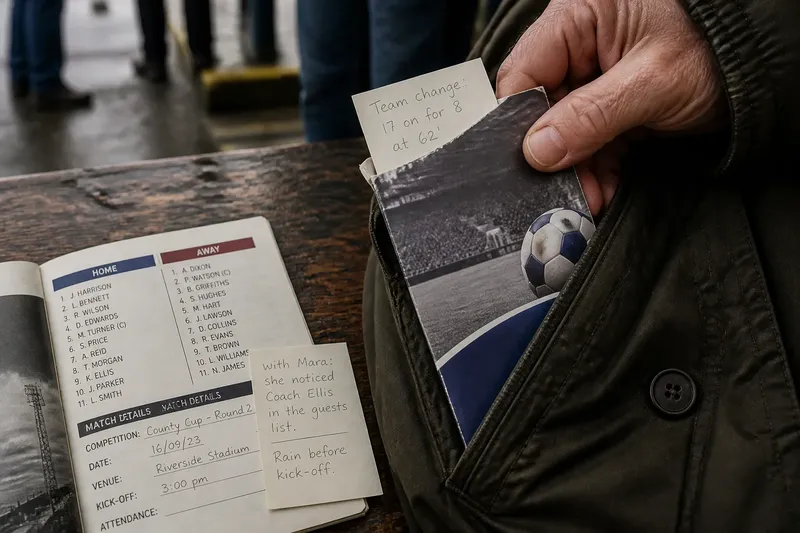
- Keeping a ticket stub, a program, or a note about a memorable match.
- Wearing team colors in a low-key way, or choosing not to wear them.
- Helping a companion feel welcome at a game without demanding that they know every custom.
These gestures are not a ranking system. A private keepsake does not make someone more devoted than a regular in the stands, just as a loud cheer does not reveal everything about what a person feels. Each is one possible expression, shaped by temperament, time, access, and circumstance.
Can you belong if you rarely attend?
Yes. Regular attendance is one way to build a relationship with a team, but it is not the only one. Work schedules, caregiving, disability, travel, cost, and personal preference can all affect how often someone gets to a venue. Those circumstances do not provide a full measure of what the team means to them.
Supporters who follow from home may share the tension of a close finish, talk through a result afterward, or keep up with a local club’s progress between games. Others may connect through family stories or a friend who brings them along when they can come. The setting changes; the feeling of being invested can remain.
Imagine a supporter who cannot attend a Saturday game because of a shift at work. They check the score during a break, ask a sibling to describe the decisive play, then call after the match to talk about what comes next. The expected observable result is a shared conversation and an ongoing connection, not a presence in the stands. That kind of participation is real even if the crowd never sees it.
Why do some supporters expect visible proof?
Because group customs make commitment easier to notice. Matching colors, standing for a chant, or returning to the same section can reassure people that others share their attachment. These signals can create warmth and solidarity, but they can also turn into a narrow standard if the group treats one style as the only acceptable one.
Pressure often appears in small comments: a quiet person gets called a casual, a newcomer is asked to name every player, or someone who misses a game is told they must not care enough. Such remarks may be meant as teasing, yet they confuse familiarity with feeling. Knowing the language and customs can deepen belonging, but no one should have to pass a quiz before being welcomed.
There is no need to police every expression or demand that a crowd behave identically. What helps is leaving room for different temperaments: make space for singing without treating stillness as disapproval, and share traditions without turning them into entry requirements. The aim is a community where enthusiasm can be heard and quieter attention can be left in peace.
How can you show support in your own way?
Start with what feels genuine and workable. If you enjoy the crowd, join in when you want to. If you prefer conversation, ask someone what they noticed in the game. If you like following the details, pay attention to the match itself rather than worrying about how your reaction looks from the row behind you.
Say you are bringing a friend who knows little about the sport. You could explain one team custom before the game, then let them decide whether to join in. The expected observable result is a visit where they can participate at their own pace, rather than feeling watched for the “right” reaction. A welcome is an invitation, not a rehearsal for conformity.
It is not worth the effort to keep score of who cheered hardest, attended most often, or used the right phrase at the right moment. Those measures make support look tidy while missing its private parts. Better to ask what helps you stay connected and what lets other people do the same.
Can a quiet supporter still feel part of the crowd?
Yes. Belonging does not require copying the loudest person around you. It can grow from sharing a place, following the same contest, or recognizing that other people care about the outcome too.
Do I have to know every chant to belong?
No. You can listen, learn at your own pace, or skip the chant altogether. Customs are ways people express connection, not a test you must pass.
Is watching without cheering disrespectful?
Not by itself. A quiet spectator may be concentrating or responding inwardly, and silence alone does not tell you what they think of the team or the crowd.
Can I support a team without wearing its colors?
Yes. Clothing is a visible signal, not a measure of attachment. Choose what feels comfortable, whether that means team gear, ordinary clothes, or nothing that identifies you as a supporter.
What if my friends expect me to act more excited?
You can tell them that you enjoy the game without showing it in the same way they do. A considerate group can share its customs while letting each person decide how to join them.
Quiet support for a team does not need a grand explanation. It may look like paying close attention, remembering a conversation, or making room for someone else to find their footing. The next time you see a still face in a lively crowd, leave space for the possibility that the person is fully there.